Everyone who plans a hill trip from Kolkata ends up in Darjeeling. And I get it — Darjeeling is iconic. But if you have been there even once, you know the reality. Crowded Mall Road, overpriced hotels, shared taxis that take forever, and on a long weekend it feels less like a quiet hill escape and more like a traffic jam at 6,000 feet.
I have been exploring North Bengal for years — not as a tourist passing through, but as someone who has built an entire travel business around taking people to places that most travel blogs have never heard of. In that time I have found 7 places I keep returning to. Some for work. Some just because I need silence and clean air and a view that has not been turned into a selfie backdrop yet.
This is that list. No paid placements. No sponsored stays. Just places I have personally visited and exactly what I think about each one, good and bad.
1. Tinchuley :Wake Up Above the Tea Gardens
The most popular spot in Tinchuley is the Gumbadara viewpoint — and it earns that popularity honestly. What struck me is that tourists drive up from neighbouring towns specifically for this viewpoint even when they are not staying in Tinchuley overnight. That alone tells you how good the view actually is.
I stayed at a homestay located just above Gumbadara, completely surrounded by lush green tea gardens on every side. There was no noise except birds in the morning and the occasional sound of tea pickers working below. That kind of quiet is genuinely hard to find anywhere near Darjeeling anymore.
One evening I walked into a local restaurant in the village — the kind of place that has no photographs on the menu and where every face is a local face. They do not allow hard alcohol inside but you can sit with a cold beer, watch the fog come in over the tea garden, and eat properly made fried rice and chowmein. After a full day of mountain roads that meal was exactly what I needed. I have eaten at fancier places in Darjeeling and remembered none of them. I still remember that meal in Tinchuley.
Best for: Couples who want quiet, views, and an authentic village feel without driving too far from Siliguri.
How to reach: Roughly 32 km from Darjeeling. Shared jeep or private car from Siliguri or Darjeeling town.
2. Latpanchar : More Than Just Birding

Latpanchar sits about 42 kilometres from Siliguri and is one of those destinations that keeps surprising you the more time you spend there.
The birding reputation is completely well deserved. I personally photographed a red-headed Trogon here — one of the most beautiful and elusive birds in this entire region. If you carry a camera with a decent zoom or simply have the patience to sit quietly in the forest, Latpanchar will reward you with sightings that serious birders travel long distances specifically for.
But what most travel articles skip entirely is the rock climbing wall. This is not a tourist activity setup — it is a proper training rock face used regularly by students from local institutions and from as far as Siliguri and NJP who come here specifically to train. I am personally very fond of rock climbing and spending time at this wall was one of my favourite hours of the entire trip.
The Jogighata bridge nearby is also worth a stop — a simple, quiet, photogenic spot that most visitors miss completely because it does not appear on the usual tourist itineraries.
Best for: Travelers who want more than just views. Perfect for birders, photographers, and anyone who enjoys exploring without a fixed plan.
How to reach: Approximately 42 km from Siliguri. Shared jeep to Matigara then a connecting jeep to Latpanchar.
3. Lava : Come for the Day, Not the Night

I am going to be completely honest about Lava because I think most travel content oversells it.
The atmosphere is genuinely dramatic — Lava remains misty and overcast for most of the year which gives it a brooding, cinematic quality that photographers love. The Lava Monastery is absolutely worth visiting and is one of the more peaceful monasteries I have been to in this entire region. On one of my walks near the monastery I met a man named Phunar Sherpa who runs a homestay with his family. He was warm, generous with local knowledge, and the kind of person who makes a destination feel real rather than staged.
There are several locally run homestays in Lava ranging from average quality to genuinely good. But if you ask me directly — I would not recommend spending more than one night here. There simply is not enough to keep you meaningfully occupied beyond that.
What I would absolutely not skip is the Pine forest in Lava. It is one of the most photogenic natural spots in this entire area. Even if you are just passing through on a longer circuit, stop here for at least an hour. You will not regret it.
Best for: A day trip from Rishop or a half-day stop on a longer North Bengal itinerary. Do not plan more than one night.
How to reach: About 34 km from Kalimpong. Shared jeep or taxi available from Kalimpong or Gorubathan.
4. Rishop : The Kanchenjunga View That Makes Everything Worth It
Rishop sits directly above Lava. You can hire a shared taxi or a private car from Lava town to reach it.
I will warn you from personal experience, the road to Rishop is in genuinely poor condition and very steep. If you are travelling with elderly family members or anyone who gets motion sickness easily, prepare them well in advance. It is not a comfortable drive and there is no way around it.
Once you arrive, Rishop has one thing that justifies absolutely everything — the Kanchenjunga view. Set an alarm for before 6 AM, walk to any of the several viewpoints scattered around the village, and on a clear morning you will see why people keep making this journey. It is the kind of view that makes you stand completely still and forget to take a photograph.
The village itself is honestly flooded with homestays and small hotels at this point — perhaps too many for such a small place. But this works entirely in your favour as a traveler. There is no need to book in advance. Just arrive, look at two or three places, negotiate confidently, and you will get a clean comfortable room at a very fair price. The heavy competition between properties keeps the rates honest.
Best for: Anyone who wants a serious Kanchenjunga sunrise experience without paying Darjeeling hotel prices.
How to reach: Rishop is 6 km above Lava. Shared taxi available from Lava or directly from Kalimpong.
5. Rangaroon : Fall Asleep Inside a Tea Estate
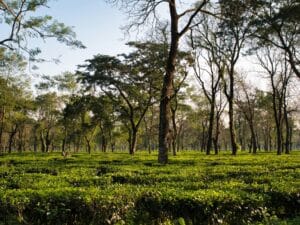
Rangaroon is an offbeat village that sits entirely within a working tea estate in the Darjeeling hills. Almost every family here has some connection to the estate — as current workers, retired workers, or descendants of families who came to work here generations ago.
Here is something most travel blogs will not tell you. The tea estate does not pay its workers well. This is not a secret locally — it is simply the economic reality of the Indian tea industry that has existed for decades. Over time many families in Rangaroon have made a practical decision to diversify their income. Some now drive shared taxis on the mountain routes. Others have converted their homes into homestays for travelers. The result for visitors like us is a genuine, completely un-curated collection of local stays run by people who actually live and breathe this landscape every single day.
There is a small stream that flows below the village. If you are visiting as a couple, pack a simple lunch and hike down to the stream for a picnic. There are no other tourists there, no entry fee, no photograph-friendly signage. Just water, trees, birdsong, and real quiet.
On clear mornings you can also see Kanchenjunga from Rangaroon. And the specific experience of waking up surrounded by tea gardens in every direction — with the smell of the estate in the early morning air and the sounds of work beginning below — is something that Darjeeling town simply cannot offer anyone anymore.
Best for: Couples and solo travelers who value authentic local experience over polished amenities and Instagram-ready interiors.
How to reach: Approximately 35 km from Darjeeling. Private car recommended as shared jeeps are infrequent on this route.
6. Sittong: Sleep Inside an Orange Garden

Sittong is divided into three sections — Sittong 1, Sittong 2, and Sittong 3 at the top of the hill. The reason most people visit is Sittong 2, where the famous orange gardens are located and where the best accommodation options are clustered.
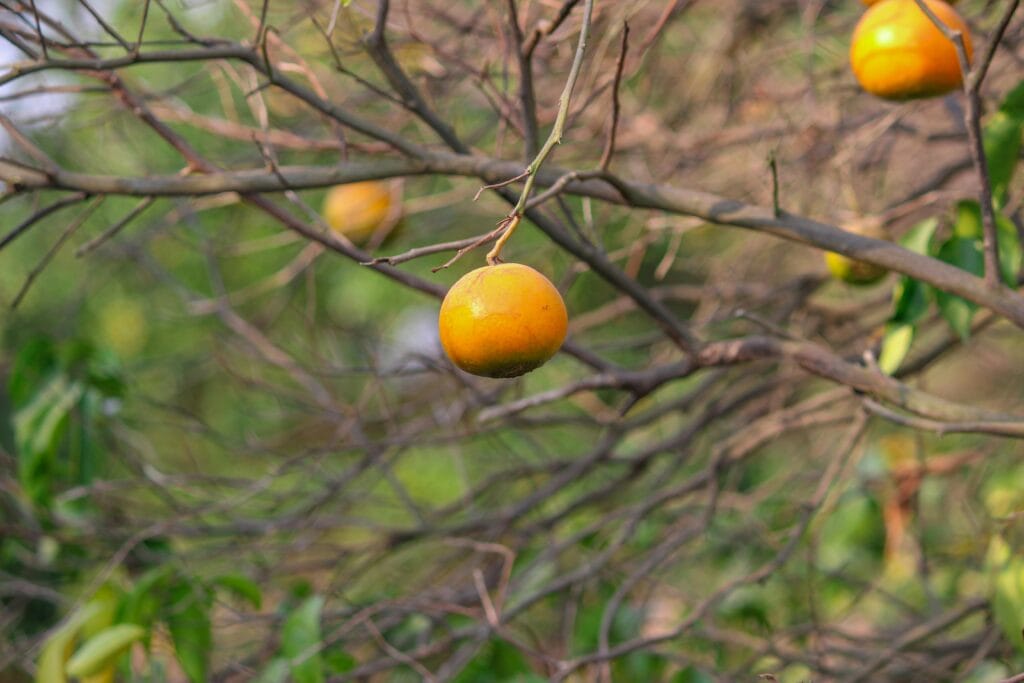
We have an associate property in Sittong, located inside a fully operational orange garden. The garden has over 900 orange trees growing across the property. The owner is genuinely one of the most knowledgeable people I have met across all my travels in North Bengal. He will walk you through everything and show you how oranges are grown at this altitude, how they are harvested, graded, and sold, and why the ones from this specific elevation taste completely different from anything you find in a Kolkata market.
He also grows coffee trees on the property, which genuinely surprised me on my first visit. It is a small operation, but the coffee is real, and the conversation around it is fascinating if you give him the time.
The homestay itself offers premium, well-decorated rooms far above the average hill station guesthouse standard you find in most of North Bengal. What makes the property truly special is a stream that flows directly through the grounds. You can sit beside it, eat beside it, read beside it, or simply do nothing beside it for an entire afternoon with complete peace. There is almost nobody around to interrupt you at any point.
I will be completely honest — you cannot see Kanchenjunga from Sittong. If that peak view is your primary goal, Rishop or Rangaroon will serve you far better. But if what you want is a deeply peaceful, uniquely North Bengali experience — surrounded by the fragrance of orange blossoms, with a stream running through your garden and a host who genuinely loves what he grows — Sittong 2 is unlike anywhere else on this list.
Best for: Couples, families, and travelers who wants a premium offbeat stay in a unique setting. Book through us well in advance for October to December because the orange season fills this property up very quickly.
How to reach: About 50 km from Darjeeling via the Kalimpong road. Shared jeep to Mungpoo then a connecting vehicle to Sittong 2.
7. Happy Valley Tea Estate : Slow Down and Actually Talk to the People

Happy Valley Tea Estate sits just 3 kilometres north of Darjeeling town center. I am including it in this list because despite being one of the most historically significant tea estates in all of India, most visitors give it thirty minutes between shopping and dinner and miss the entire point of being there.
Entry is completely free. If you want to go inside the factory and watch how tea is actually processed — withered, rolled, fermented, dried, and sorted into grades — the guided tour costs just ₹100 per person. For everything you learn and see during that tour, it is one of the best value experiences available anywhere in Darjeeling.
The estate was established in 1854, making it the second oldest tea estate in Darjeeling. It sits at over 2,100 metres above sea level, covers 177 hectares, and employs more than 1,500 people. The tea produced here is sold to premium buyers across the world.
But the factory tour is honestly not the most important thing here. The most important thing is the people. If you approach them with genuine curiosity and basic respect, the workers at Happy Valley are open to conversation. Ask them about their daily work, their lives, the challenges they face, what has changed and what has not. The tea industry in Darjeeling has a long and complicated history and the families who work these estates carry the full weight of that history in their daily lives.
After visiting Rangaroon earlier on this same trip and understanding what tea estate wages actually look like for workers, walking through Happy Valley took on a completely different meaning for me. That context — built from one real conversation in a small village — changed how I have looked at every cup of Darjeeling tea since.
Several good homestays and hotels in Darjeeling are close enough that you can walk directly to Happy Valley without needing a taxi. Start early when the light is soft and the estate is quiet.
Best for: Anyone who wants to go beyond the surface of Darjeeling tourism and actually understand what goes into their morning cup of tea.
How to reach: 3 km from Darjeeling town center. Easily walkable from most hotels in upper Darjeeling.
Before You Pack Your Bag — Practical Notes
- Best time to visit: October to December for clear Kanchenjunga views, the orange season in Sittong, and crisp cool air across all these destinations. March to May for spring colours and comfortable trekking weather across the hills.
- Base yourself in Siliguri or NJP if you are planning to cover multiple destinations on this list — it is the most practical and cost-effective transit hub for all of them.
- Always carry cash. ATMs are unreliable or simply absent in most of these villages. Withdraw enough before you leave the highway.
- Download offline Google Maps before you leave NJP or Siliguri. Mobile signal becomes patchy or disappears entirely in many of these areas once you go off the main roads.
- Shared jeeps are your most practical transport option on most of these routes. They are affordable, run regularly on the major routes, and the drivers often know more about current road conditions and local situations than any travel app will tell you.
- Book peak season in advance. Sittong 2 especially fills up very quickly in October and November during orange season.
More from The Unofficial Escape
If any of these places caught your attention, read our detailed guides:
- Tinchuley: Why This Tiny Tea Village Near Darjeeling is Better Than Darjeeling Itself
- Latpanchar: North Bengal’s Best Kept Secret for Bird Watchers and Peace Seekers
- Sittong Orange Village: Why This Quiet Valley Is Better Than Darjeeling In Winter
- Lava and Lolegaon: The North Bengal Weekend Escape Nobody Tells You About