
Most people who plan a trip to North Bengal have Darjeeling, Gangtok, or Dooars on their list. Latpanchar? Rarely. And that is exactly why you should go there.
Tucked inside the Mahananda Wildlife Sanctuary at an altitude of around 4,500 feet, Latpanchar is a small forest village in the Darjeeling foothills that has quietly become one of the most extraordinary offbeat destinations in West Bengal. It is not the kind of place that shouts for attention. It draws in the right kind of traveler, the ones who slow down, listen, and look up.
Where Exactly Is Latpanchar?

Latpanchar sits on the northern edge of the Mahananda Wildlife Sanctuary, roughly 60 kilometres from Siliguri and about 45 kilometres from New Jalpaiguri (NJP). The nearest major town is Sevoke, and from there a winding road climbs through dense sal and bamboo forest before opening into the village. The drive itself, taking roughly 90 minutes from NJP, is one of the most beautiful in the entire region.
The sanctuary spreads across 159 square kilometres between the Teesta and Mahananda rivers, and Latpanchar sits at its highest point, making it a natural lookout over the forested valley below.
Why Birders From Across the World Come Here

Latpanchar is, without question, one of the finest birding destinations in India. Over 240 species of birds have been recorded inside the Mahananda Wildlife Sanctuary, and Latpanchar gives you direct access to the heart of it all.
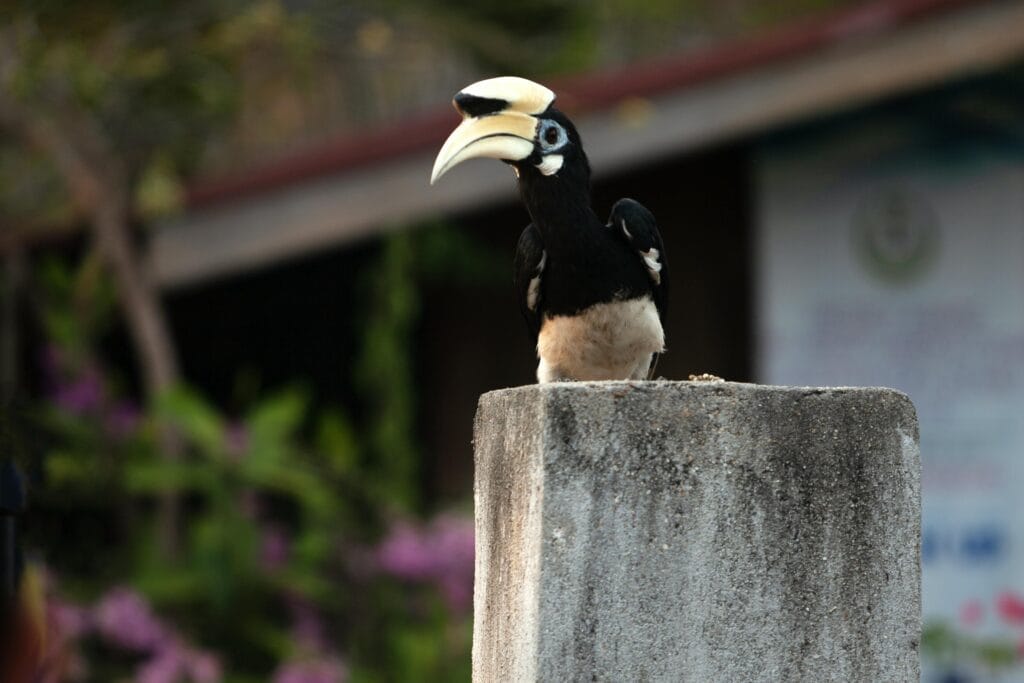
The star of the show is the Rufous-necked Hornbill, a globally threatened species with a call so distinct it stops you in your tracks. Seeing one in the wild is a rare experience even for seasoned birders, and Latpanchar is one of the very few places in India where sightings are fairly consistent during nesting season between March and June. Apart from the Hornbill, you can spot the Himalayan Salamander, the Grey-headed Canary Flycatcher, the Blue-throated Barbet, the Mountain Imperial Pigeon, and dozens of sunbirds and babblers that move through the canopy all morning.
You do not need to be a serious birder to enjoy this. Walking the forest trails at dawn with a cup of chai in hand, listening to the jungle wake up around you, is an experience that stays with you long after you leave.
What Latpanchar Feels Like on the Ground
This is not a place with restaurants, resorts, or a market strip. There are a handful of homestays run by local families, and your meals are cooked fresh in the family kitchen, usually rice, dal, sabzi, and whatever seasonal vegetable the garden is giving that day. Connectivity is limited, the roads are narrow, and the nights are genuinely dark and quiet.
That is the whole point.
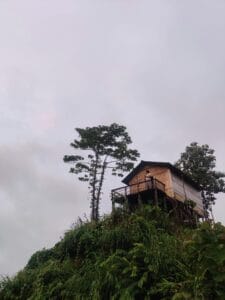
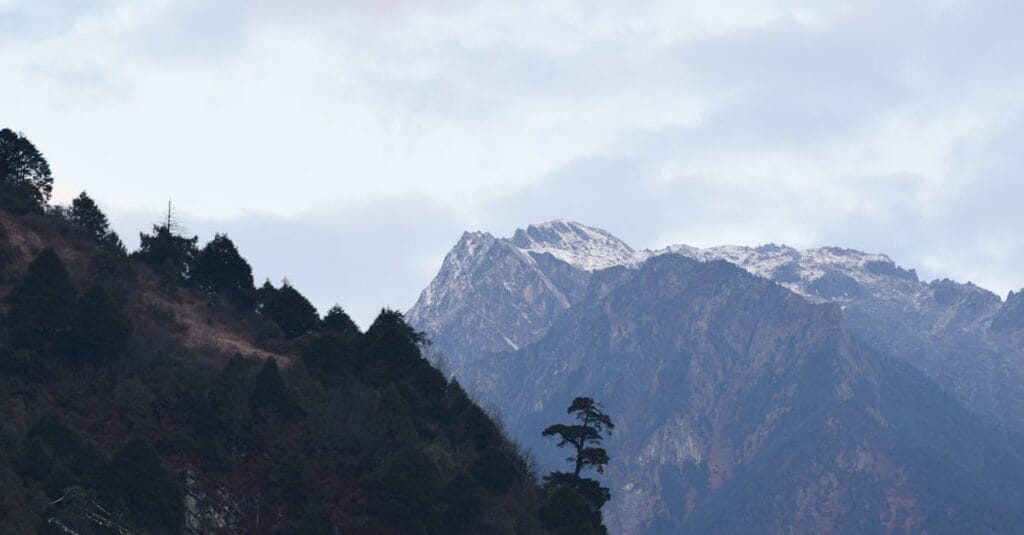
Sitting on a homestay balcony at sunrise watching mist roll through the Teesta valley below, with a Hornbill calling somewhere deep in the tree line, there is no noise, no crowd, no rush. Latpanchar resets you in a way that popular hill stations simply cannot.
Best Time to Visit Latpanchar
October to April is the ideal window. The skies clear up after the monsoon, the birdlife is most active, and the forest trails are accessible. March to June is the Hornbill nesting season and perhaps the single best time to visit if birding is your priority. Avoid July and August as the roads become treacherous and the forest stays closed.
How to Reach Latpanchar
The nearest railhead is New Jalpaiguri (NJP), well connected to Kolkata, Delhi, and most major cities. From NJP, you can hire a shared or private cab to Latpanchar, the journey takes around 90 minutes via Sevoke and the Coronation Bridge over the Teesta. The Coronation Bridge itself is a landmark worth photographing on the way.
Bagdogra Airport is the closest airport, roughly 60 kilometres away, with regular flights from Kolkata and Delhi.
Things to Do in Latpanchar
Beyond birding, Latpanchar rewards slow exploration. You can walk the forest trails independently or hire a local guide who knows every bird call and every jungle path. The Mahananda River flows nearby and a walk down to its banks in the morning is peaceful beyond words. If you stay at least two nights, consider a short hike to the upper ridgeline for a clear view of the Kanchenjunga range on a good morning.
The village community is warm and unhurried. Conversations over dinner with your host family are often the most memorable part of the trip.
A Word Before You Go

Latpanchar is not a place that tolerates loud music, plastic waste, or careless visitors. The community has worked hard to keep it clean and protected. Travel here the way the place deserves, lightly, respectfully, and with genuine curiosity. The forest gives back exactly what you bring into it.
If you are planning a trip to North Bengal and wondering whether to add Latpanchar to your itinerary, the answer is simple. Do not skip it. In fact, make it the reason you come.
Pingback: North Bengal Beyond Darjeeling: 7 Places I Keep Going Back To - The Unofficial Escape